
Why Clutter Always Comes Back (And How to Finally Stop It)

You've probably done this before, right?
Gotten organized … or almost organized.
Committed a whole weekend to the process.
Maybe enlisted friends or family.
Pulled together a bunch of bags to donate.
Cleared your counters.
Made the bed,
Tossed old magazines, catalogs and other junk mail.
And felt relieved and like you’d really done something.
And you had.
It’s just that feeling of finality that was misplaced.
Because a few weeks later—sometimes even faster than that—it's back.
Like the Terminator but not the friendly one from Terminator 2.
The angry one from the original.
Of course, unlike the Terminator, it’s not exactly the same android or in this case, stuff.
But it’s the same feelings.
Overwhelmed.
Confused.
Frustrated.
Exhausted.
Enraged.
Demoralized.
How did you end up with the same piles in the same spots?
Excellent question.
Actually one of the most important questions because it revealed something very specific.
And that is that you’re asking the wrong question.
Because what’s layered directly beneath that question is this actual question which is “what in the name of G-d is wrong with me?”
Surprise—there’s nothing wrong with you.
You’re not lazy, stupid, broken, damaged, defective, undisciplined, or somehow uniquely bad at this.
You’re not failing at organization … because organizing isn’t really what you’re doing.
You’ve been solving the wrong problem.
THE MISTAKES ALMOST EVERYONE MAKES
Most people treat clutter like a mess to be cleaned up.
So they clean it up.
But life keeps happening.
Mail comes in.
Groceries get dropped off in the kitchen.
Purses and bags get set down.
The phone follows you around like a lost puppy.
And things get taken out, but don’t always make it back where they came from, or they get moved from one surface to another.
So it seems like clutter regenerates itself, right?
You’d swear it was growing back on its own.
In your most cynical moments, you may actually believe that gremlins are running around in the middle of the night, rearranging things just to drive you crazy.
If only identifying the culprit were that simple.
Here's what most organizing advice skips entirely: clutter doesn't come back because you lack discipline.
It comes back because you never had a system for staying organized in the first place.
“Cleaning” or “tidying” up—thanks, Marie—without a system to stay organized on the other side is like bailing out a boat without finding the source of the leak.
You'll be bailing forever.
Although your socks will look great in your dresser drawer.
Sound familiar?
MISTAKE #1: CONTAINERIZING BEFORE DECIDING
After 30+ years of doing this work, this is one of the biggest and most common mistakes people make.
We can thank the Home Edit for this while we’re at it.
Pretty containers are really pretty—you’ll get no argument from me there.
But most people rush out and buy containers before they know what they're keeping.
They label shelves before they've defined categories or assigned homes.
They rearrange furniture before they've figured out what the room is actually used for.
That couldn't be more backwards.
Putting things into containers before you’ve made any decisions about what stays and what goes feels satisfying when you snap that lid on.
But all you’ve done is relocate clutter with the addition of a fancy box.
It looks pretty.
It can even feel productive.
But it doesn't reduce friction, and it doesn't stop clutter from coming back—because the decisions that created the clutter in the first place were still never made.
The only decisions you made here were what container to put it in and what you wanted to call it when you printed out the label.
Remember—the first decision is always sorting like with like.
Not keep or toss. Sort.
All the pens together.
All the extension cords together.
All the sweaters together.
Once you can see everything in its category all at once, the keep-or-toss decisions get a lot easier to make—and a lot faster.
MISTAKE #2: SYSTEMS THAT ONLY WORK ON YOUR BEST DAY
If your organizing system only works when the moon is in the Seventh House and Jupiter aligns with Mars …
Or when you’re rested, motivated, and uninterrupted …
It's not a system.
Or it’s not a reliable one—it's a wobbly system at best.
Think of it as the Weeble of systems.
But more often than not, it’s just a ghost or a fantasy of a system.
Good systems not only anticipate real life, they are flexible enough to meet it.
That includes busy days, low energy days, and days when simply not making more clutter is the win.
Bad systems demand perfection—and collapse the first time anything less than optimal shows up.
If putting something away requires three steps, a label you have to remember, and a decision about where exactly it goes, it's not going away.
It's going on the counter.
And you’ll deal with it “later.”
MISTAKE #3: TREATING ORGANIZING AS A ONE-TIME EVENT
Back to that sinking ship and bailing water.
You don’t just “get” organized and then you’re done.
Because life changes every day.
Needs change all the time.
So, what worked for your space two years ago might not work now—because you don't work the way you did two years ago.
That doesn't make you irresponsible or stupid or fundamentally flawed.
It makes you human.
The only thing flawed here is that “system” that’s not a real system.
And that’s why clutter keeps coming back.
Because somewhere, someone told you if you could just get organized once, it would automagically stay that way.
Sorry.
They lied.
THE ORDER THAT ACTUALLY WORKS
Make one decision … possibly with a few sub-decisions below that one.
What do you need in your life right now?
Meaning, what do you do all day?
Do you still craft?
Make art?
Cook?
Write?
Crunch numbers?
Fix machines?
Build houses?
Once you’re clear on the kinds of things you do, then you’ll have a working knowledge of the kinds of things you need around you.
Then, sort all those things like with like.
Sort first.
Before you contain anything, before you label anything, before you buy a single basket and before you let a single thing go—decide what belongs together.
Like with like is the key here.
Which is why it’s one of the three legs of The Organizational Triangle®.
And then start deciding who stays and goes—based on the thing’s use, beauty and functionality.
Once you know what's actually staying, the amount is almost always less than you thought.
That’s why you find a home for them second.
Where will they live, all those like items together?
Each category of stuff has one home.
That home is up to you and anyone you live with.
You want the laundry soap in the guest bathroom? Go for it.
You want your books in the living room? Awesome.
You want your keys on a hook in the front hall closet? Great.
They don’t need to live where similar things live in my home.
Or your mom’s home.
Or your neighbor’s home.
They just need to live all together and someplace logical to you so you can find them fast and put them back just as fast.
Once that’s done, you can containerize things that need containers.
I have all my USB cables in a ziplock bag in an Ikea plastic tub.
I have all my travel supplies in a larger version of the same tub.
I store crackers in a glass container in the kitchen instead of in random mylar bags with chip clips.
All my reusable shopping bags live in the biggest bag—I call it the bag of bags.
You do you.
If you don’t like the idea of a bag of bags, knock yourself out.
Just be clear you’re not figuring out how to get a rocket to the moon.
You’re finding a home for all your loose totebags.
Keeping things in scale helps to diffuse all those “what about” questions bouncing around inside your head.
THIS TIME IT HOLDS
The reason clutter keeps coming back isn't a character flaw.
It's an order-of-operations problem without a sustainability plan.
Because there is no “getting” organized as if it’s a one-and-done.
Getting organized is really staying organized.
It’s a way of life.
And before you freak out about that, just equate it with brushing your teeth or flossing.
You don’t give either of those a second thought, you just do them.
It’s the same thing here.
Take something out? Put it back when you’re finished.
Don’t set it down and lie to yourself that you’ll put it away later.
It takes the same amount of time now to return it as it does later.
Except later you have other things vying for your attention.
Which means it gets emotionally harder and harder to “find” the time.
So this is the simple recipe.
1) Figuring out what you need to do the things you do
2) Grouping each category of stuff all together
3) Deciding if any of these like items can now leave
4) Finding a singular home for each category of like thing
5) Putting like things into a container if needed
What it even shorter?
1) Decide about you
2) Sort
3) Decide about stuff
4) Assign homes
5) Containerize as needed
In that order, every time.
And to get there, start by setting a timer.
Sort like with like.
It’s easy.
Just like the card game Concentration.
Then make the decisions you've been avoiding.
Find everything a home.
Put it back in its home when you’re finished with it.
That's it.
That's how it stops being something you redo every few months—and starts being something that holds.
Still buying containers before you've made a single decision?
Unstuff Your Life! walks you through the real order—decide, sort, decide, assign homes, containerize.
Get Unstuff Your Life! on Amazon →
Rather not rebuild the same system that failed you three times already?
The De-Stress Your Mess Challenge gets you the order right the first time, live, with me.
Join the De-Stress Your Mess Challenge →
Both ready for your pass.
Conquer Your Clutter in Just 5 Days!
In 5 days, with ZERO overwhelm, you can tame your clutter with my simple, easy-to-use system.
Unlike those other quick-fix bandaids, THIS system solves the root cause of clutter—so it's gone for good.
For details about the next challenge, click the button below.
Video replays available 24/7 ... so you'll never miss a thing!
.png)


Why Your Home Feels Overwhelming After You've Decluttered
You organized everything and it still doesn't feel calm. Here's what's actually running the show behind the clutter — and how to fix it for good.
Read the article →
How to Keep Your Kitchen Counters Clutter-Free
A cute basket won't fix it. Andrew Mellen on why your kitchen counter becomes the default home for everything without one—mail, keys, chargers—and how to actually stop it.
Read the article →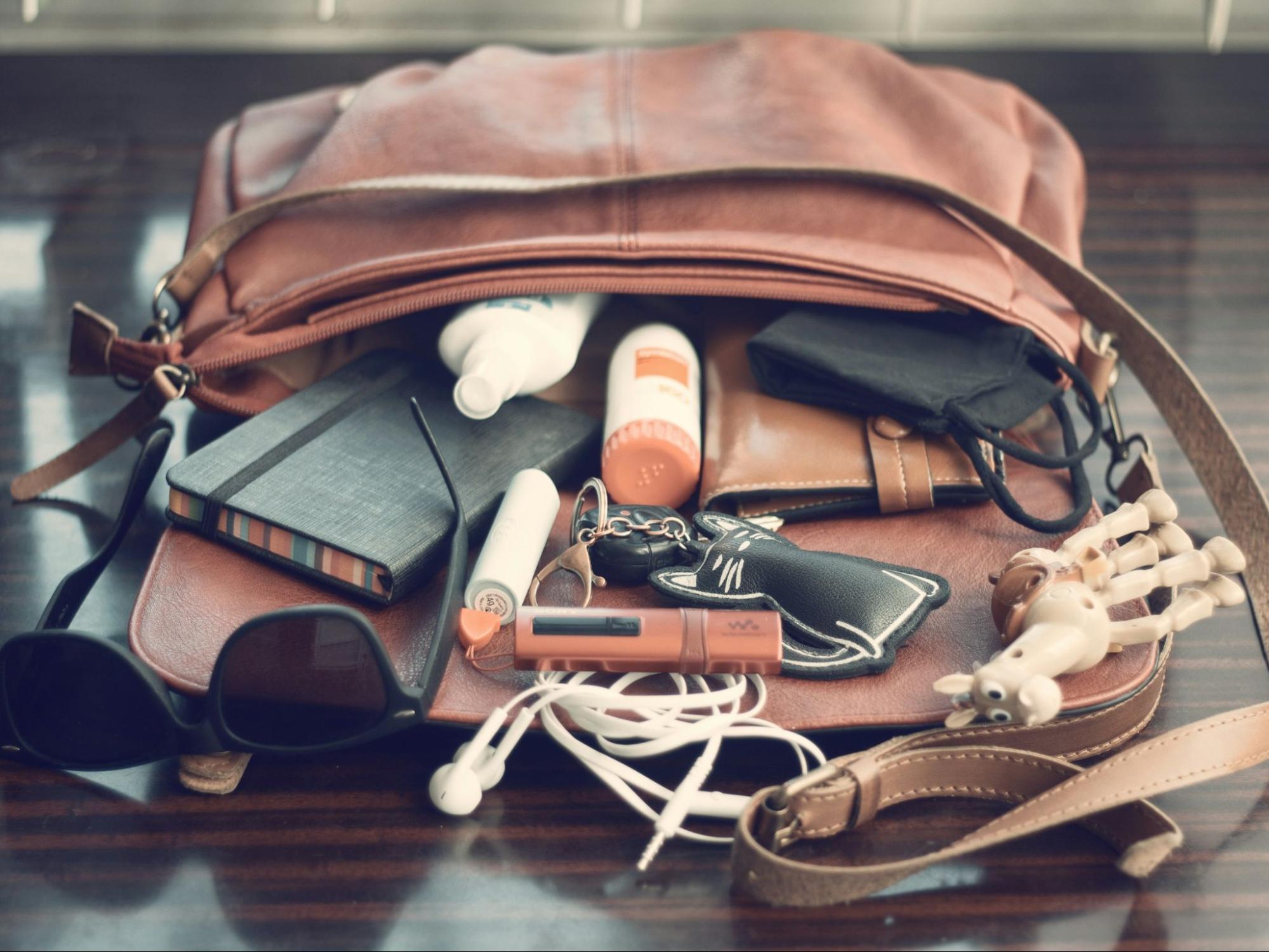
The Woman Who Mistook Her Life For a Handbag
A client's handbag weighed nine pounds. Andrew Mellen on the difference between what we carry and what we're actually afraid to lose—inspired by Oliver Sacks' The Man Who Mistook His Wife for a Hat.
Read the article →
How to Organize an Entryway (So It Actually Stays That Way)
Cubbies and hooks won't save you. Andrew Mellen on why your entryway falls apart within days of cleaning it—and how to build one that actually holds, whether or not you've got kids and backpacks.
Read the article →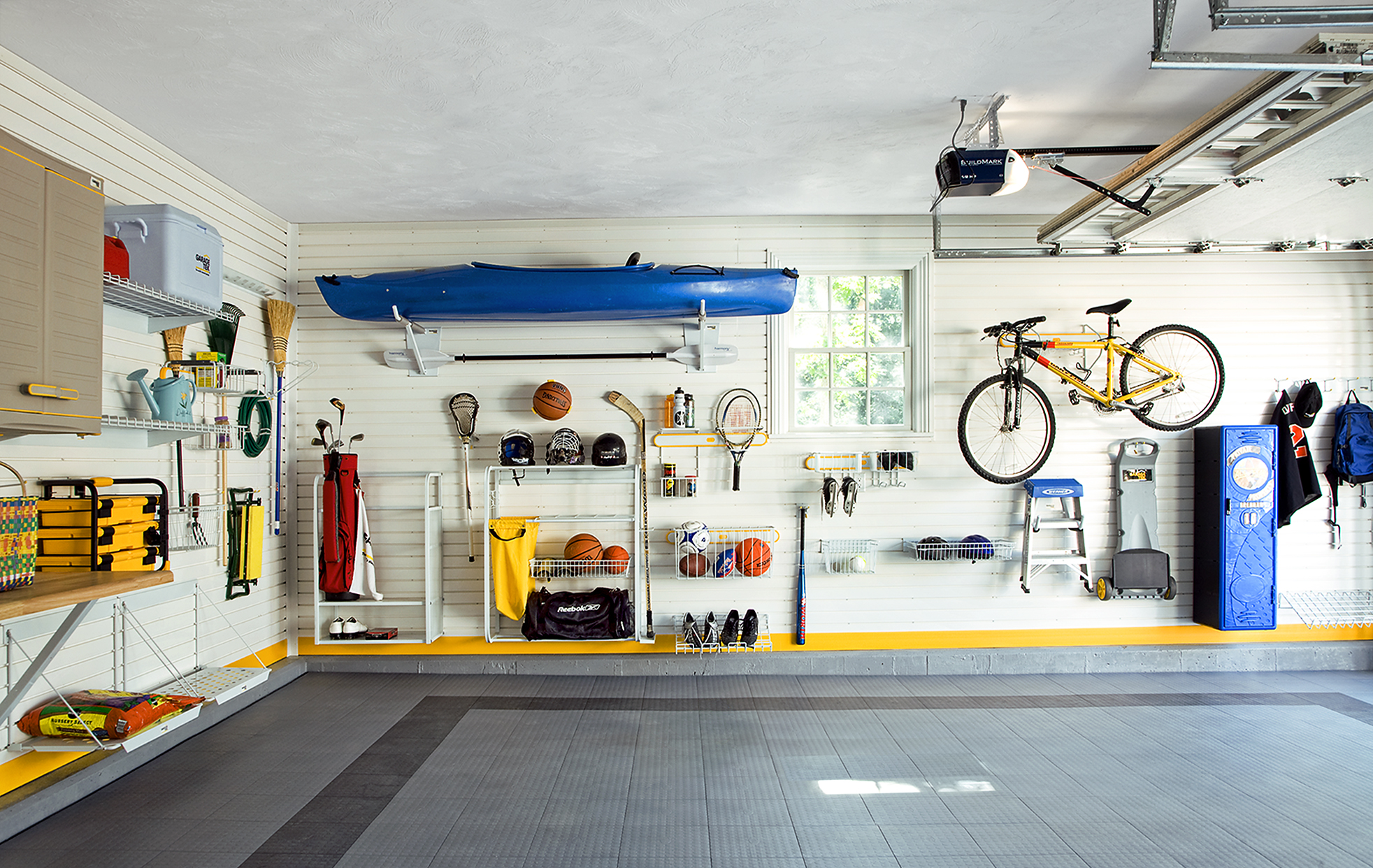
How to Declutter a Messy Garage
A bigger garage won't fix it. Andrew Mellen on why your garage became a dumping ground for every decision you didn't want to make—and how to actually clear it, one timer at a time.
Read the article →
Why Can't I Keep My House Organized?
Getting organized isn't the problem. Staying that way is. Andrew Mellen on why we're addicted to the dramatic reveal and allergic to the boring maintenance that actually works.
Read the article →