
What Highly Organized People Do Differently (It Has Nothing to Do With Willpower)

You probably know someone like this, don’t you?
Their kitchen counters are always clear.
Their car doesn't have used coffee cups in the cup holders and a graveyard of library books and other old papers in the back seat.
When you ask if they've seen your phone charger, they know where theirs is—and because they’re so gracious and organized, they offer it to you to use.
No smugness, no holier than thou or I’m better than you attitude—it doesn’t even occur to them to lord your disorganization over you—they’re just happy to help.
Because they’ve got all that extra free time.
And when you think of them, you probably hate them and maybe envy them a little, too.
Through gritted teeth, you've probably thought “must be nice” while you force out a pained, “Thanks so much! I’m sure mine will turn up at some point.”
And then you console yourself with your next thought that some people are just wired that way—you have other talents.
I'm here to tell you that's one of your 200 lies.
Not that you don't have other talents—you do.
The part that says you have faulty wiring.
It's not wiring.
It's not a personality type.
It's not some gene for tidiness that you were either born with or not.
It's standards.
Meaning standard ways of doing things—not just “they have high standards.”
That’s one of the ways we distance ourselves from them.
And by doing so, cut ourselves off from having a similar level of functionality and lack of friction that feels as smooth and effortless as it looks.
Also, FYI, standards have nothing to do with willpower.
THE WILLPOWER MYTH
Here's why this matters.
If you believe organized people have more willpower than you, you've basically given yourself permission to stop trying—because willpower feels like a fixed resource, and clearly you didn't get the same allotment they did.
But watch an organized person for a day, and you won't see them gritting their teeth, white-knuckling their way through a hundred tiny decisions about where things go.
You'll see them not making those decisions at all.
Because they already made them.
Once.
A while ago.
That's the whole secret.
It's almost insultingly simple.
WHAT A STANDARD ACTUALLY IS
A standard is just a decision you don't have to make again.
I have all my USB cables in a ziplock bag, in a plastic bin, on a shelf.
Actually, let me clarify.
I have all my USB-A and B cables in one ziplock bag and I have all my USB-C cables in another ziplock bag right next to it in the same plastic bin.
I didn't decide that today.
I decided it once, when I first moved into this home.
And now, whenever I need a USB cable or get a new one, there's no decision.
There's just one of two bag in a bin on a shelf.
Same with my travel stuff.
Same with my crackers—they live in a glass container in a kitchen cupboard, not in 11 half-open mylar bags with random chip clips, because at some point I decided that's where crackers go and what they go in.
Every one of these is a standard.
None of them required willpower or the kind of discipline you might think of when you think of muscle-y, aggressive discipline.
It’s really more about consistency.
They required a decision, made one time, that I then just... follow along.
Like brushing your teeth.
You don't summon willpower to brush your teeth.
I mean you might on a late night or early morning where you have to propel yourself into action.
But in those moments, the teeth brushing is just one of several actions you take to get yourself moving.
And you just do it, because somewhere along the way it became automatic.
That's what organized people have.
Not more willpower.
More automatic.
WHERE STANDARDS COME FROM
Here's the part that connects to everything else we've talked about.
You don't get to standards by being disciplined.
You get to them by going through the actual process: decide, sort, decide, assign homes, containerize.
And one more step that is the rinse and repeat step: maintain.
First, you decide what you need based on what you do.
I shave my head, I don’t use shampoo.
So the only shampoo I have in the house is in the guest bathroom for guests.
In my bathroom are razor blades, a razor, and shaving cream.
I don’t pick up extra shampoo because it’s on sale because I don’t need it at any price.
And the only shampoo I do bring home is fancy shampoo from fancy hotels because it’s free and because I want my friends who do have hair to have a luxe experience if they stay over.
Why not spread around the fun?
Then you sort like with like—all your chargers together, all your sweaters together, all your kitchen gadgets together.
Then you can drill down one more layer if you want—depending on how much stuff you have.
For example, you could have a subpile of just v-neck sweaters, or crewneck sweaters or cardigans.
Then you look at those piles and decide what stays—based on whether you use it, love it, and it actually works or functions.
Then you assign each category one home.
Not "around here somewhere."
Not “in that closet.”
One specific place.
Inside that closet, on that shelf, possibly on the left side of the shelf.
Now before you store them in their home, you can containerize, if needed.
Now that you know what you're actually housing.
And then—maintain.
Put it back.
Every time.
That last step is where the standard actually forms.
The first few times, putting the thing back where it belongs takes a tiny bit of intention.
After that, it's just where it goes.
You're not deciding anymore.
You're just doing.
WHY THIS FEELS HARDER THAN IT IS
If you're thinking, sure, but I don't have time to go through the process for every category in my house right now—you're probably right.
The good news is, you don't need to.
You just need a timer and one category at a time.
15 minutes, or 7, or 5, or 2.
Sort like with like.
Make the decisions.
Give your stuff a home.
Do that for one category, and you've just created one standard.
One less thing in your life that requires a decision ever again.
Do it for a few categories over a few weeks, and you start to look like one of those people whose stuff just seems to... work.
Not because you became someone else.
Because you stopped re-deciding the same things over and over.
Or running into a decision, throwing up your hands and in the process, throwing something onto a surface and leaving it there for “later.”
YOU DON'T NEED A PERSONALITY TRANSPLANT
So no—organized people don't have more willpower than you.
They just have fewer decisions left to make about stuff, because they made them already.
They still have all the other demands on their time that you do.
What to eat, when to pick up or drop off the kids … you know, life.
But here’s another secret not-so-secret.
A lot of those decisions can be made once, too.
You could have a menu and do meal prep at the start of the week.
You could create a carpool schedule for your kids so you know who’s picking them up on Tuesday and who’s dropping them off on Thursday.
Once you start establishing standards, it can get a bit contagious.
When you see how much time you can save, you want to save even more of it.
Not to hoard it but to do all those things you swore you never had time to get to.
Surprise—you now have the time.
So start today.
Make one decision today about who you are and what you do and what you need to successfully do what you do.
Then pick one category of stuff.
Grab your timer.
Sort like with like, decide what still serves you and what you’re finished with, give everything that remains a home, toss them into a container if that helps keep them tidy and together.
Then just keep putting stuff back its home when you’re finished with it.
That's it.
That's the whole difference.
Still think it's about willpower, not standards?
Unstuff Your Life! shows you exactly how to build the standards that make organized life automatic—no discipline required.
Get Unstuff Your Life! on Amazon →
Rather build your standards faster, with someone watching your blind spots?
The De-Stress Your Mess Challenge gets you there live, with me, alongside people who are done deciding the same things over and over.
Conquer Your Clutter in Just 5 Days!
In 5 days, with ZERO overwhelm, you can tame your clutter with my simple, easy-to-use system.
Unlike those other quick-fix bandaids, THIS system solves the root cause of clutter—so it's gone for good.
For details about the next challenge, click the button below.
Video replays available 24/7 ... so you'll never miss a thing!
.png)


Why Your Home Feels Overwhelming After You've Decluttered
You organized everything and it still doesn't feel calm. Here's what's actually running the show behind the clutter — and how to fix it for good.
Read the article →
How to Keep Your Kitchen Counters Clutter-Free
A cute basket won't fix it. Andrew Mellen on why your kitchen counter becomes the default home for everything without one—mail, keys, chargers—and how to actually stop it.
Read the article →
The Woman Who Mistook Her Life For a Handbag
A client's handbag weighed nine pounds. Andrew Mellen on the difference between what we carry and what we're actually afraid to lose—inspired by Oliver Sacks' The Man Who Mistook His Wife for a Hat.
Read the article →
How to Organize an Entryway (So It Actually Stays That Way)
Cubbies and hooks won't save you. Andrew Mellen on why your entryway falls apart within days of cleaning it—and how to build one that actually holds, whether or not you've got kids and backpacks.
Read the article →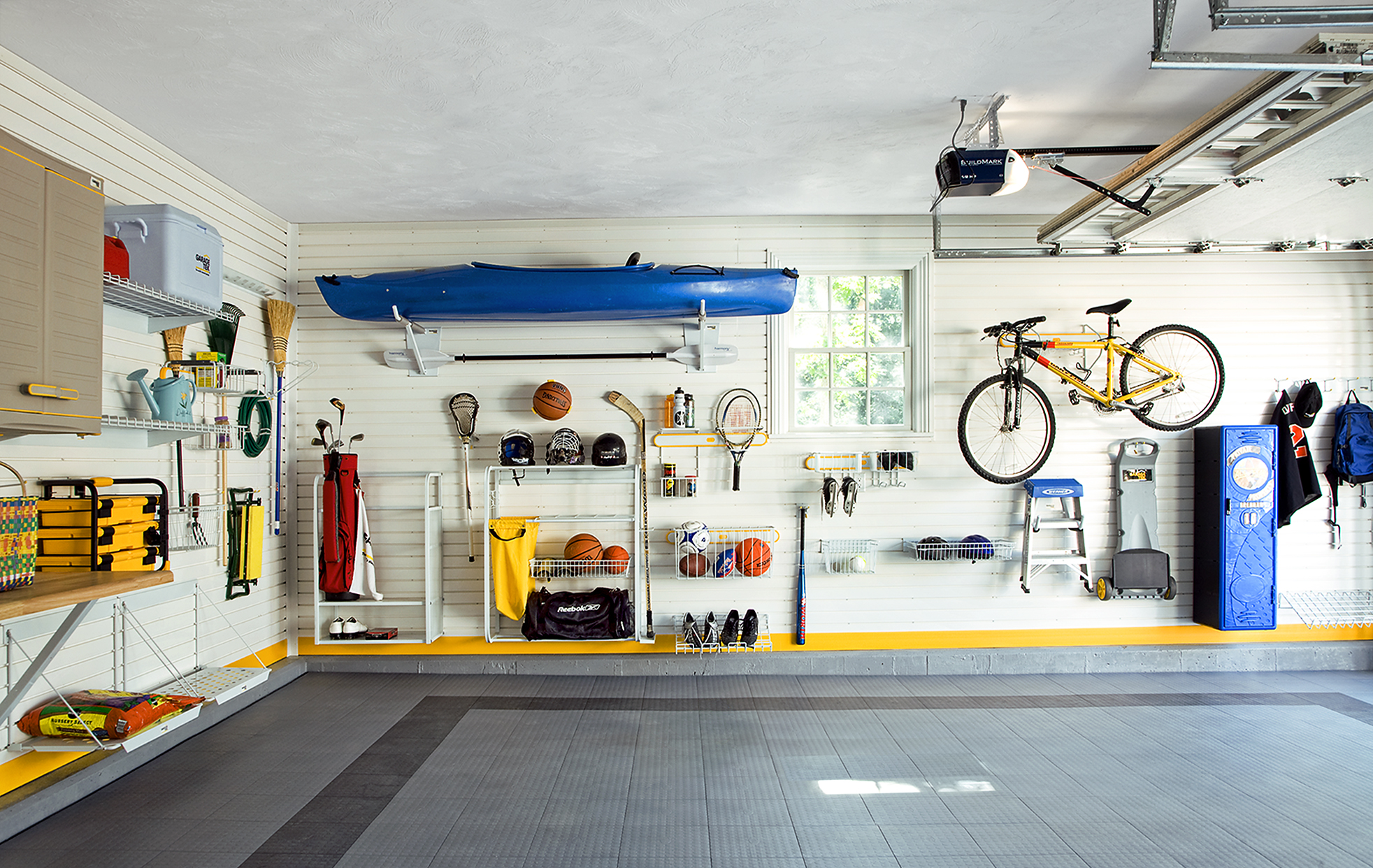
How to Declutter a Messy Garage
A bigger garage won't fix it. Andrew Mellen on why your garage became a dumping ground for every decision you didn't want to make—and how to actually clear it, one timer at a time.
Read the article →
Why Can't I Keep My House Organized?
Getting organized isn't the problem. Staying that way is. Andrew Mellen on why we're addicted to the dramatic reveal and allergic to the boring maintenance that actually works.
Read the article →