
Where to Start Decluttering When Everything Feels Like Too Much

So many people show up here looking for help and advice because they're stuck.
And I understand.
There’s a lot of bad or incomplete information out there.
And when you’re feeling overwhelmed, it's often the classic can't-see-the-forest-for-the-trees situation.
You walk into the kitchen and all you see are cluttered counters and cupboards packed with too many things in too many places.
You walk into your office and there's piles of papers everywhere.
Some of it makes sense, and the rest is just stacks of random documents.
You may even be able to find that one statement you're looking for, two-thirds of the way down a particular stack.
But pulling that rabbit out of your hat doesn't mean the stacks are organized, or anywhere close to the best way to handle paper.
You open your closet door and all you see is a jumble of color and texture—even as you're trying to find that one white shirt that doesn't need ironing and looks great whether you're wearing jeans or tailored trousers.
That's the everything-feels-like-too-much feeling.
And if you're nodding along, here's the good news.
Where to start is one of two places. Always.
START HERE: THE TWO STARTING POINTS
If you've got energy and enthusiasm in the moment, go to the place that's the most cluttered.
That's where you'll see the greatest progress fastest—and that progress fuels the next round.
If you're feeling tentative, genuinely in your feelings about being overwhelmed, go for the lowest-hanging fruit instead.
Quick wins.
Wash a dish.
Load the dishwasher.
Empty the dishwasher.
Wipe down a surface.
Take out the recycling.
Fold a load of laundry.
Start a load of laundry.
Sort the mail and recycle the junk.
Eventually you'll touch everything anyway—you'll meet in the middle from either direction.
Which direction you start from just depends on how you feel in the moment, every time you approach the clutter.
Neither is consistently the best approach.
It's completely dependent on how you feel each time you start.
The only rule: don't keep score.
The timer does that for you.
THE TIMER IS YOUR BEST FRIEND
Some of you resist the timer.
Again, I understand.
You’ve got a story about it feeling too rigid.
Or too long.
Or too short.
Or that you don’t need a stupid device keeping track of the time—you can do that yourself.
Or any number of other stories.
Here’s the thing.
You have limited bandwidth and energy.
Can we agree on that?
If so, then logically, why would you want to siphon off any of it simply to keep track of how long you’ve been tasking when you could instead direct that right at the problem in front of you?
When it comes to setting the timer, barring ADHD or other neurodivergent considerations, 15 minutes is a great place to start.
It’s long enough to mean something and short enough to probably not tire you out.
But if 15 minutes feels like too much today, try 7.
If 7 feels like too much, try 5.
If 5 feels like too much, try 2.
You can get a lot done in 2 uninterrupted minutes.
What you don’t do is fly without the timer.
Not once. Not even when it's going great.
Please let the timer keep score—so you don't have to.
Without the timer, one of two things will happen.
Either you’ll look up and think, how long have I been at this? It feels like hours, but it's been 12 minutes.
Or the opposite: You’ll think, I'm on a roll, forget the timer, I'll just keep going—and three hours later you haven't finished, you're wiped out, and you've hit the point where it's bigger before it gets better … and now you feel like crap.
Like a failure. Because it feels (and looks like) there’s more stuff lying around than when you started.
That's why we say bigger before better, not worse.
It’s still about volume, not about quality.
Some of my students misquote this as worse before it gets better—that's one of their 200 lies, and entirely their own projection.
Here's what's actually happening: when you break apart a pile or a stack or a clump of stuff, it spreads out.
It looks like more.
It feels like more.
But it's the exact same number of items it was five minutes ago.
It was always that much.
You just couldn't see it when it was compressed into one pile.
So when the timer goes off, finish the decision you're in the middle of—unless it's one that's going to frustrate you for 10 minutes before you surrender.
If that’s the case, let the decision go for today.
And if you've got momentum?
Reset the timer and go again.
15 more minutes. Or 30.
You can do this many times in a day—15 minutes to 2 hours per round, then a break, then back at it.
That's how you dig out a garage, a basement, an attic, or a storage unit you've been paying for since 2018.
What you never do is grab a machete and charge off into the jungle of clutter convinced that you’ll keep working until you finish.
What that really means is, you’ll keep working until you're exhausted.
And that kind of enthusiasm looks great in movies but it’s counterproductive in real life.
It's a sure-fire way to run yourself into the ground.
There's a difference between mindset and energy, and it matters here.
Mindset is what gets you started—whether you walk into that room feeling fierce or feeling puny.
Energy is what determines how long you can actually task once you're in there.
Your mindset can influence your energy, sure.
But energy is finite.
We all have a limit, and we all know what it feels like to blow past it.
That’s when tomorrow ends up paying for today’s overreach.
And I get it—sometimes it still feels good to push through.
To tell yourself you’re on fire and are going to beat this thing this time.
Because you think you'll feel drained but it’s a “good” drained and anyway, you’ll bounce back in the morning.
And maybe you used to be able to do that consistently.
But the older you get, the less bounce there is in the spring.
And why lose tomorrow because you were feeling inspired today?
Slow and steady is how you’re actually going to win this race.
WHAT YOU ACTUALLY DO WITH THE TIME
Sort like with like.
Always.
Before anything else.
This is the part almost everyone skips, and it's the part that makes everything else possible.
One-off decisions don't work.
Should I keep this sweater—yes or no?
Who the hell knows.
In a vacuum, every sweater comes with a story attached, and the story always wins.
But put all your sweaters together, and something shifts.
Now you can see them side by side.
That's the one with the frayed sleeve.
That's the one with the snag under the arm.
That's the one that's never looked right since you bought it but you kept hoping it would.
Next to its siblings, the decision isn't really about the sweater anymore. It's obvious.
And it's a lot easier to let go of the one that doesn't work when you can see, right there, that you've got plenty that do.
YOU CAN DO THIS
None of this requires a perfect plan, a free weekend, or a personality transplant.
It requires a timer, a place to start, and a willingness to sort like with like before you make a single keep-or-toss decision.
You're not going to fix the kitchen, the office, and the closet today.
You're not supposed to.
You're going to fix 15 minutes of one of them—and then, if you've got it in you, another 15.
That's the whole job.
Pick a spot.
Set the timer.
Sort like with like.
Decide.
Then notice how it feels to have done it.
Still think a timer is optional?
Unstuff Your Life! shows you exactly how the timer, sorting, and deciding work together—so you finish what you start instead of abandoning it three hours in.
Get Unstuff Your Life! on Amazon →
Rather not figure out where to start alone?
The De-Stress Your Mess Challenge puts you in a room with me and people who are actually finishing—not just starting again.
Conquer Your Clutter in Just 5 Days!
In 5 days, with ZERO overwhelm, you can tame your clutter with my simple, easy-to-use system.
Unlike those other quick-fix bandaids, THIS system solves the root cause of clutter—so it's gone for good.
For details about the next challenge, click the button below.
Video replays available 24/7 ... so you'll never miss a thing!
.png)


Why Your Home Feels Overwhelming After You've Decluttered
You organized everything and it still doesn't feel calm. Here's what's actually running the show behind the clutter — and how to fix it for good.
Read the article →
How to Keep Your Kitchen Counters Clutter-Free
A cute basket won't fix it. Andrew Mellen on why your kitchen counter becomes the default home for everything without one—mail, keys, chargers—and how to actually stop it.
Read the article →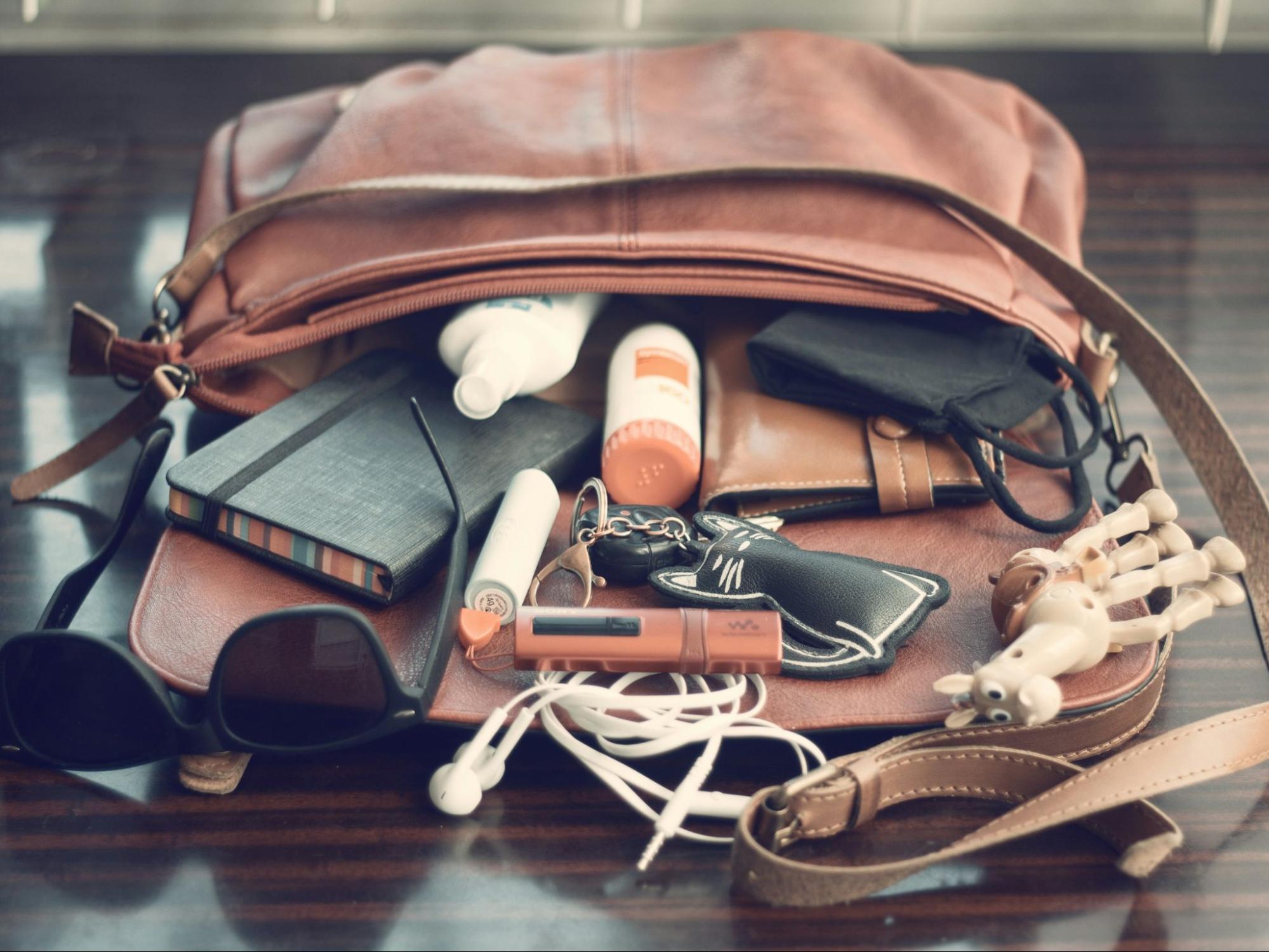
The Woman Who Mistook Her Life For a Handbag
A client's handbag weighed nine pounds. Andrew Mellen on the difference between what we carry and what we're actually afraid to lose—inspired by Oliver Sacks' The Man Who Mistook His Wife for a Hat.
Read the article →
How to Organize an Entryway (So It Actually Stays That Way)
Cubbies and hooks won't save you. Andrew Mellen on why your entryway falls apart within days of cleaning it—and how to build one that actually holds, whether or not you've got kids and backpacks.
Read the article →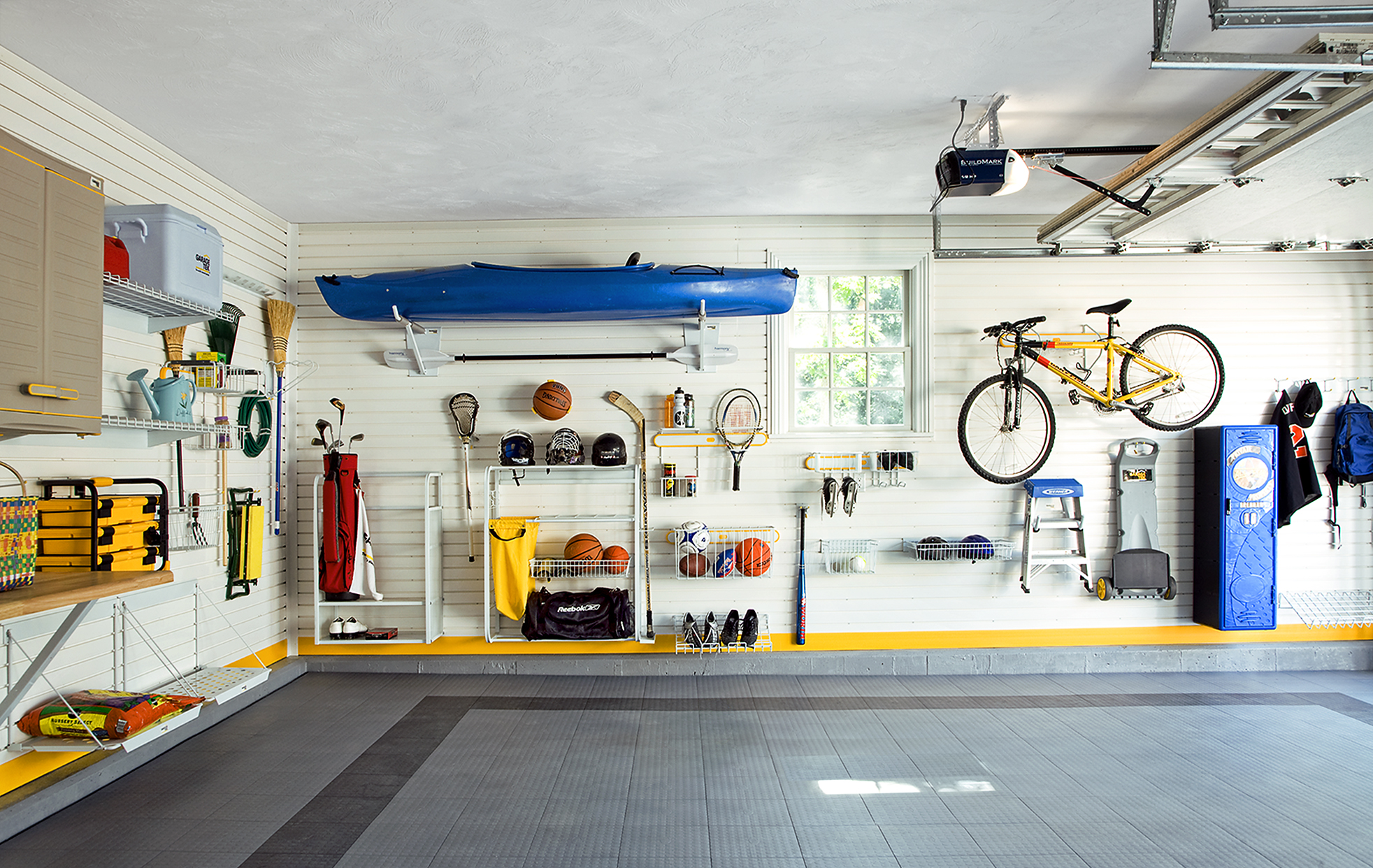
How to Declutter a Messy Garage
A bigger garage won't fix it. Andrew Mellen on why your garage became a dumping ground for every decision you didn't want to make—and how to actually clear it, one timer at a time.
Read the article →
Why Can't I Keep My House Organized?
Getting organized isn't the problem. Staying that way is. Andrew Mellen on why we're addicted to the dramatic reveal and allergic to the boring maintenance that actually works.
Read the article →