
The Organizational Triangle®: How to Get Organized and Stay Organized

Getting organized isn't complicated.
Which doesn't mean it's always easy.
You’ve probably already sorted through drawers, cleared counters, and gotten rid of things you no longer need or want.
The problem is you did each of these things as if they were one-off activities, not part of a simple, sustainable system for living your life, organized.
So they probably took you longer than you thought or wanted them to take and then you were surprised when the clutter kept coming back.
I see this all the time.
That faulty premise, that you’d do each of these once and then things would naturally stay organized, is at the root of every failed “getting organized” project.
And while this may be new information for you or old information framed a new way, you probably already have a lot of knowledge when it comes to getting organized.
You’ve probably read books on the subject, watched TV shows or YouTube videos, attended classes and workshops.
And if that’s true, your historic failures are not the result of a lack of information.
It's the absence of that reliable system, that rinse and repeat process that doesn’t require a lot of thought, just consistency.
Which again is simple but not always easy—especially when your feelings and stories about stuff are making or influencing your decisions.
That's where The Organizational Triangle® comes in.
At the core of all my work are three simple rules:
- One Home for Everything
- Like With Like
- Something In, Something Out
The first two get you organized. The third keeps you that way.
I know I created it but it is pretty awesome that these three rules are all you need.
You don’t need a fancy or complicated filing system.
You don’t need to spend a small fortune on expensive organizing products.
And you don’t have to force yourself to become a minimalist or live inside some rigid dogma that shames you for every slip-up or failure.
You don’t need to become a completely different person.
You just have to be willing to tell yourself the truth as accurately as you see it.
And follow 3 simple rules instead of trying to find all the ways to evade using them and delaying your freedom from the bondage of stuff.
Rule #1: One Home for Everything
This couldn’t be simpler which is why the clever or smart people try to improve upon it, thinking there’s got to be an even better way to do this.
There isn’t.
And really, why spend a minute trying to improve something that is elegant, simple and so easy to succeed at?
Every item has one home and only one home.
This doesn’t mean you’re only allowed to have one of anything.
You can have a pair of reading glasses in your bedroom, one by the TV and one in your home office.
You can have a pair in your car or in your bag.
What you don’t want to do is wander around your house with your bedroom readers on the top of your head then set them down on the bathroom sink and walk away.
Similar to how you treat your keys except in this case, you probably only have one set of keys you carry around.
I have a few spare sets for guests but those all live together and I’m never using those for my own access to my home.
So if your keys sometimes live on the kitchen counter, sometimes in your coat pocket, sometimes on the dining table under a pile of mail, and occasionally in the bottom of a bag, you don't have a system.
You have a scavenger hunt that is a lot less fun than the one you might have played on Easter Sunday searching for eggs or the first night of Passover chasing the Afikomen.
Just choose one place where your keys live.
It should be convenient, easy to access, somewhere you're naturally inclined to put them and look for them AND ideally near the front door.
Then put them there. Every time.
The same principle applies to your spatulas, your linens, your living will, your mobile phone, and everything else you own only one of.
When something has a home, you don't have to keep deciding where it belongs.
And when you stop making the same decisions over and over, you get some of your time and energy back.
What if you don't know where something belongs?
Start with where you use it.
Assigning homes for things should work with your habits, not against them.
If you always drop your keys by the front door, that might be the best place for them.
Mine live in an antique metal rice bowl inside a bench right next to the front door.
They used to live in the same bowl but on a shelf or a table in previous homes.
But there’s no good place for a table here AND the bench has a piano hinge on it so it’s easy to lift.
The rice bowl holds the keys, my wallet, my chapstick and my money clip.
You don’t get bonus points for putting them somewhere pretty that you'll never remember or use.
I love good design and beautiful things.
But when it comes to organization, function should always lead your choices with aesthetics following right behind.
So you don’t need an elegant system you can't or won’t maintain.
You need a functional system that doesn’t snag you visually every time you interact with it.
Rule #2: Like With Like
We use this rule twice. When sorting things to decide what stays and goes.
And again when we’re finding their one home.
That way, all like objects live together. And yes, all.
This sounds obvious until you start looking around.
Putting like with like lets you see what you actually own.
How many different places are you storing office supplies?
I don’t mean the pen that’s next to the phone in the kitchen and the one that’s in your nightstand with a pad of post-its.
I mean the ziplock bag of “extra” pens you’ve got stashed for “someday.”
Just one or is there a bag in the office and another in the basement and then one more somewhere in the garage?
When similar things are scattered throughout your home, you have no real idea of the quantity of stuff you own.
And when you need a replacement or just the thing itself, you waste time visiting all the different places you either think you stashed it or previously had stashed it.
At best, you just wasted time.
At worst, you couldn’t find what you were looking for so instead you run out and buy another one.
Then two months later, you find the original stash.
Why does this rule make decluttering easier?
When it comes to deciding what stays or goes, it is so much easier to make those decisions when you are comparing all like objects to their siblings.
By itself, it’s sometimes hard to decide if you should keep this sweater or that pair of jeans.
It's difficult to make informed decisions when you can't see the whole picture.
But side by side, when you can see that three pairs of jeans have holes or frayed cuffs and one has an ink stain on the butt and you still have seven perfectly good pairs, letting the four pairs go doesn’t sting as much.
Likewise, you might feel attached to every individual coffee mug.
You remember exactly who gave it to you or where you got it.
But when you put all 27 of them together and realize you only ever use your six favorites, and nine of them have some sort of a chip or crack, the decision can look very different.
You're no longer asking, "Do I like this mug?"
You're asking, "How many mugs do I actually need and of all of them, how important is this one compared to all the others?"
That's a much more useful question.
Just follow this simple recipe and you’ll see how much easier it is to decide what you’re keeping and what you’re letting go.
Gather all similar items together.
Decide how many you need and want to keep.
Sift through each of them, try them on if you need to.
Which ones work, or fit or look great and deserve space in your life?
Those are the ones to hold onto.
Assign them one home large enough to contain them all.
Then release the leftovers.
This doesn't mean every object has to live in a giant collection somewhere inconvenient.
I have a pair of scissors in the kitchen I just use for food.
And I have another pair in the office just for paper and opening packages.
These aren’t exceptions to the rule, these are the rule, each in their own home.
In each case, the location needs to be intentional—not the result of setting something down somewhere and forgetting about it.
Rule #3: Something In, Something Out
The first two rules help you get organized.
This one helps you stay that way.
Once you've reached what I call stuff equilibrium—having enough of what serves you and nothing that doesn't—maintaining that balance becomes the job.
When something new comes in, something else goes out.
Bought a new sweater? Consider which existing sweater has earned its retirement.
Better yet, don’t go into the store if you haven’t already identified which sweater you’re ready to release.
If you’ve ever said there aren’t enough hours in the day, why would you spend any of them shopping for something you don’t need?
Likewise with replacing a kitchen appliance.
Why not decide what happens to the old one before the new one moves in?
This isn't about punishing yourself for buying something new.
Or keeping score.
I don’t care how much stuff you have.
If you have a 1000 sf closet and you have enough room for 150 pairs of shoes and you love shoes, go for it.
There’s no rule that says you’re only allowed to have 30 pairs.
But if 150 is enough, when the 151st pair comes home, it must mean you’re ready to let another pair go.
What’s underneath this is recognizing that your space, time, attention, and energy aren't unlimited and it costs you time, money and energy to be the steward of things.
Every new thing you bring into your life comes with a responsibility to manage it.
Something In, Something Out helps you make that choice consciously.
Does this mean I have to throw something away every time I buy something?
No. The point isn't mindless disposal.
The point is maintaining balance.
If you're replacing something broken, the decision may be obvious.
If you're bringing home something genuinely new, consider whether you have the space, need, and willingness to care for it.
And remember that "out" doesn't necessarily mean the trash.
Depending on the item's condition, it may be appropriate to donate, sell, recycle, or give it to someone who can use it.
The goal is to stop accumulating by default.
Why Does Clutter Keep Coming Back?
Because clearing clutter and preventing clutter are two different things.
You can spend an entire weekend organizing your home.
By Sunday night, everything is looking fantastic.
The pillows on the sofa have the perfect chop.
All the laundry is done, put away and there are fresh linens on the bed.
The kitchen is gleaming and there’s nothing superfluous on the counters.
Then Monday happens.
You’re running late and you rush in to start dinner and toss the mail on the dining room table.
You’re eating in the kitchen anyway so no big deal, right?
Then you kick off your shoes but you have to take out the trash tonight so why bother putting them away when you’re just going to need them in another 50 minutes?
Oh, and there were those three packages that were stacked up by the front door you just kicked inside and left on the floor until you open them before bed.
And before long, the clutter is back.
Not because you're inherently lazy or lack discipline.
But because of the 200 lies you tell yourself about when you’re going to put things back or away for the first time.
And because the system you’ve got running is either too complicated or doesn’t mesh with how you actually live.
That’s the genius of The Organizational Triangle®.
It doesn’t tell you where your keys need to live just that your keys need a home.
So it addresses the fundamental problems directly without boxing you into a compliance corner.
One Home for Everything eliminates the uncertainty about where things belong.
Like With Like makes it easier to know what you have.
Something In, Something Out helps prevent new clutter from undoing your progress.
And none of it requires you to become a different person.
How to Start Using the Organizational Triangle® Today
Don't start with your entire house.
Choose one small area that's driving you crazy.
Maybe it's a kitchen counter, or your desktop, or that drawer you've been avoiding for months.
Then:
- Gather similar items together. See what you actually have.
- Decide what belongs in your life. Keep what you use, need, and genuinely value.
- Give everything you're keeping one home. Make it logical and easy to maintain.
- Return things to their homes. Make that part of using them, not a separate organizing project.
- Release everything you’re finished with.
- Pay attention to what comes in. Maintain the balance you've created.
You don't need to finish everything today.
Start somewhere manageable.
Set a timer for 15 minutes.
Make as many decisions as you can before the timer goes off.
Stop when the timer dings.
If you have more time and are feeling empowered, set the timer again and repeat.
And if not, you just spent 15 minutes getting stuff under control.
What If Getting Rid of Stuff Is the Hardest Part?
That's where organizing becomes more than moving objects around.
We all have feelings about our stuff.
Memories.
Expectations.
Guilt.
Aspirations.
Stories about who we were, who we are, and who we think we're supposed to become.
That shirt might represent a version of yourself you haven't been in years.
That expensive appliance might remind you of money you wish you hadn't spent.
That box of inherited belongings might feel like a connection to someone you love.
All those feelings are real.
But your feelings don't have to make every decision for you.
You can acknowledge the story without allowing it to decide what stays in your home.
And you can appreciate what something meant without giving it a permanent residence in your life.
If this ever feels like a lot, and it might, just think of a museum.
You visit a museum and look at an amazing painting.
You can appreciate it. You might be so moved by it that you are overcome by emotion.
Maybe you even cry.
But as powerful as that experience may have been, you don’t then take the painting off the wall and bring it home.
You can appreciate so many different things that exist in the world without needing to own them all.
Is the Organizational Triangle® Just for Your Home?
Not at all.
The same principles can help you organize an office, manage digital files, simplify your workspace, and reduce the time you spend looking for things.
For example, your digital documents need consistent and singular homes just as much as your physical belongings do.
And your digital files should mirror your physical files.
Similar files should be grouped by category or type.
And you should know exactly where to find them in 30 seconds or less.
This approach withstands trends in furnishings as well as innovations.
As technology changes, and it will, the tools may change.
But these three principles won't.
Getting Organized Is Only the Beginning
Big reveals are exciting on TV, right?
“Move that bus!”
But you don't need another dramatic before-and-after moment in your own home.
You just need a way to live that doesn't require you to keep starting over.
The Organizational Triangle® gives you three straightforward rules to return to whenever things begin to feel complicated.
One Home for Everything.
Like With Like.
Something In, Something Out.
That's it.
You don't have to organize your life perfectly.
You just need a system that works consistently enough to give you more freedom, less friction, and more time for the things that matter.
And that's almost certainly relationships and experiences and activities, not stuff.
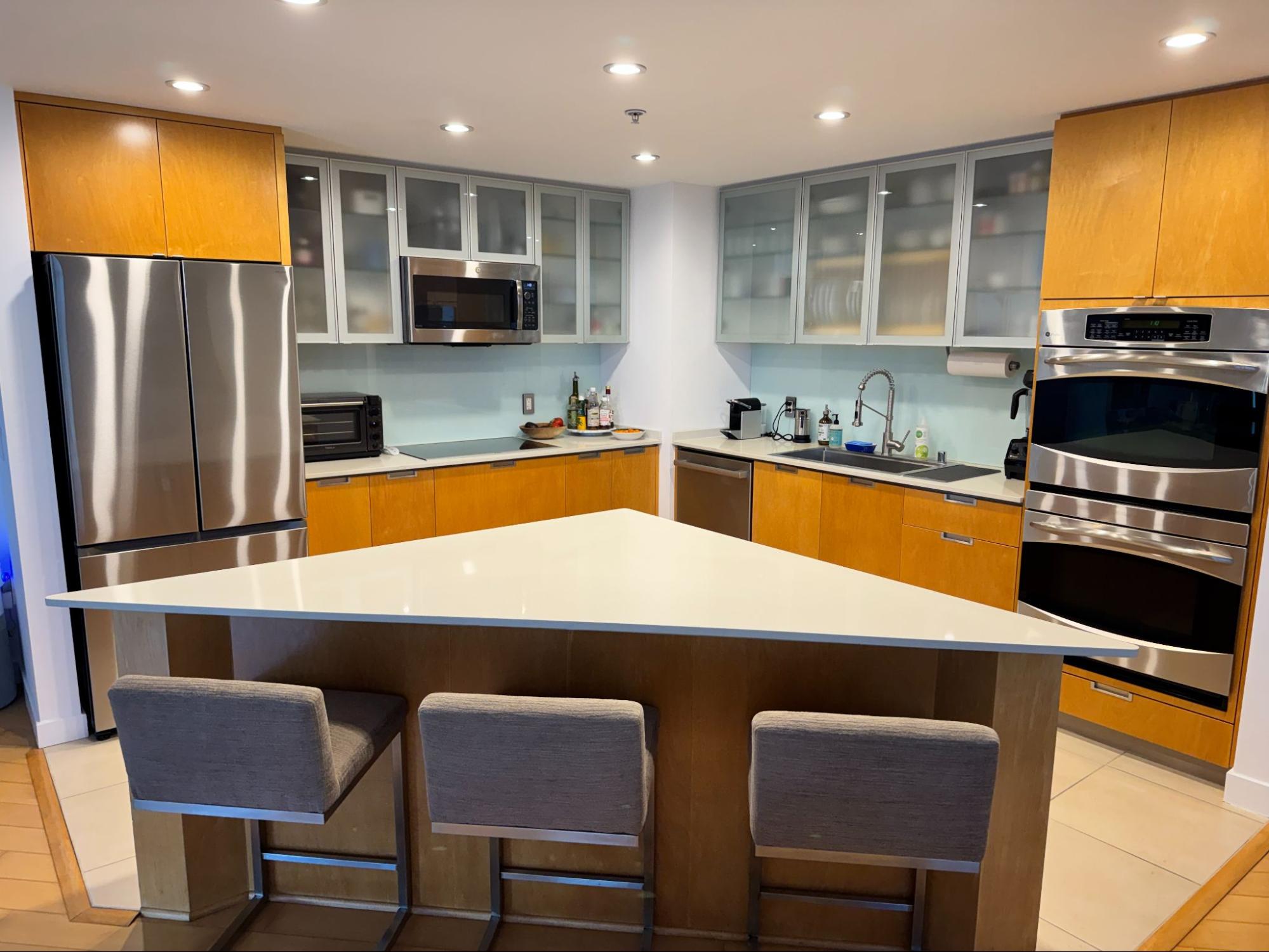
How to Keep Your Kitchen Counters Clutter-Free
A cute basket won't fix it. Andrew Mellen on why your kitchen counter becomes the default home for everything without one—mail, keys, chargers—and how to actually stop it.
Read the article →
How to Organize an Entryway (So It Actually Stays That Way)
Cubbies and hooks won't save you. Andrew Mellen on why your entryway falls apart within days of cleaning it—and how to build one that actually holds, whether or not you've got kids and backpacks.
Read the article →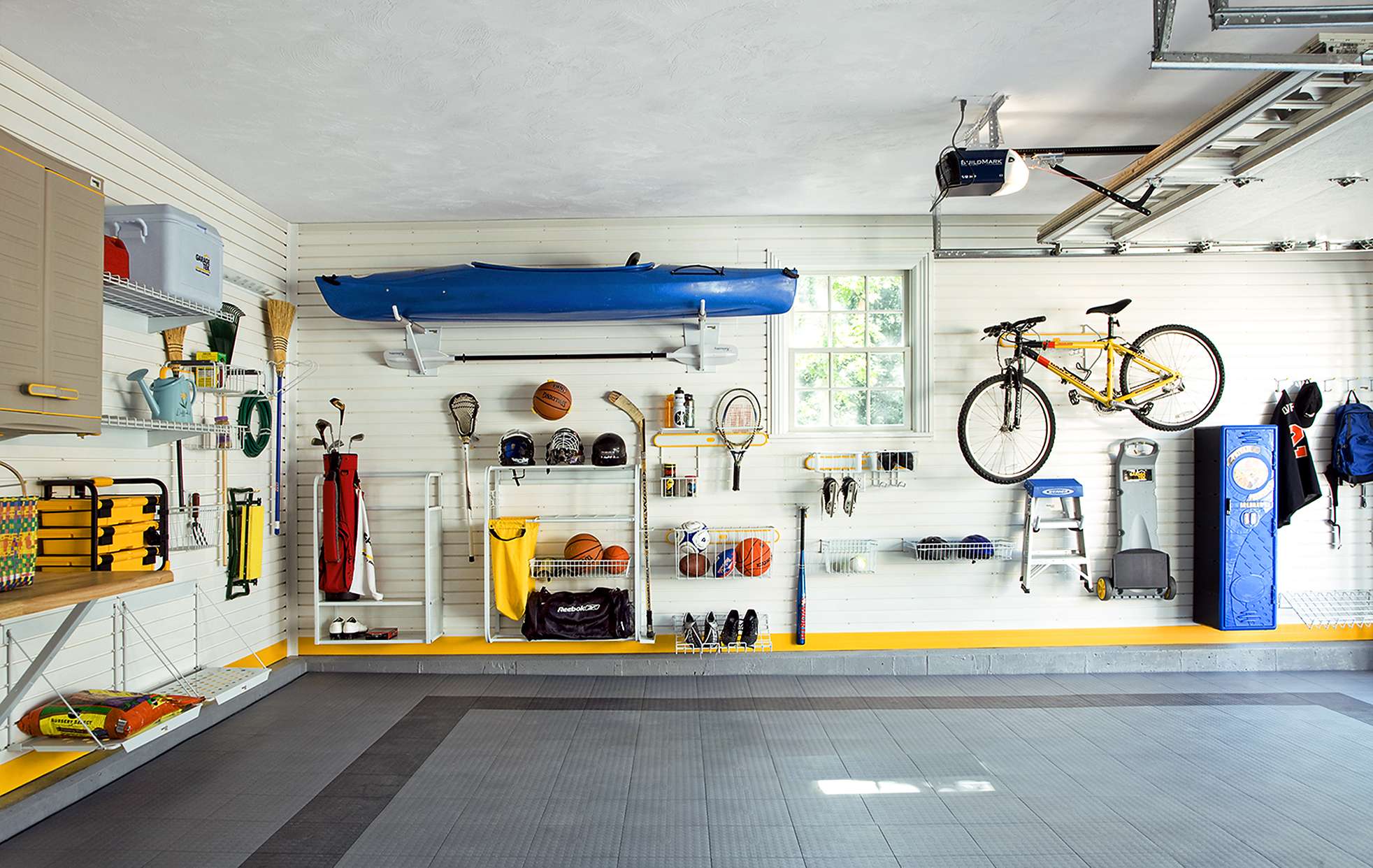
How to Declutter a Messy Garage
A bigger garage won't fix it. Andrew Mellen on why your garage became a dumping ground for every decision you didn't want to make—and how to actually clear it, one timer at a time.
Read the article →
Why Can't I Keep My House Organized?
Getting organized isn't the problem. Staying that way is. Andrew Mellen on why we're addicted to the dramatic reveal and allergic to the boring maintenance that actually works.
Read the article →
What Highly Organized People Do Differently (It Has Nothing to Do With Willpower)
You probably envy people who are always organized. Andrew Mellen explains why it's not willpower or wiring—it's standards, and anyone can build them.
Read the article →
Why Clutter Always Comes Back (And How to Finally Stop It)
If clutter keeps coming back after you organize, you're solving the wrong problem. Andrew Mellen explains the real five-step system—and why skipping a step is why it never holds.
Read the article →