
How to Simplify Your Life (And Why Most People Never Do)

Most people don't have a complicated life because they want one.
No one wakes up in the morning, or in the middle of the night thinking … how can make my life more difficult than it already feels?
Life is often complicated because simplifying it is harder than it looks or sounds—and almost everything in the culture pushes us in the opposite direction.
More is better. Better is better. Busy means important. Options equal freedom.
None of that is true in a vacuum.
Sure, things can make your life easier—but three toasters won’t make a single slice of toast any faster or browner.
Busy with high value activities can mean a rich life—but busy for the sake of a full calendar can just as easily mean you say yes indiscriminately and keep painting yourself into a time corner.
Choices are great—but too many options not aligned with your values is just another form of clutter.
I understand why these ideas are packaged and sold to us—it keeps us distracted and occupied.
But more, better and infinite choices are not the way out even though the “experts” keep talking about it—seemingly relentlessly.
Tim Ferriss has been asking his guests—Derek Sivers, Seth Godin, Martha Beck, Cal Newport, among others—what one to three decisions could dramatically simplify their lives.
It's a great question.
But the answers keep landing in the same places: philosophy, abstraction, and mindset, but typically mindset disconnected from action.
It’s all great as a thinking exercise and can produce an interesting conversation.
But unfortunately, not one single thing will be reduced or released by simply thinking or talking about it.
Of course, he never asked me.
Because I would have told him, just like physical clutter, thinking, talking or wishing for a simpler life won’t make it so.
Ironically, the problem is much simpler.
And you can find it all around you.
It’s living in your garage, definitely on your calendar, and for sure in the 17 tabs on 14 different browser windows you have open …
Not to mention, the 7 things you already said yes to this week that you’re starting to regret or don’t have time for.
Simplicity isn't a philosophy you adopt.
And it isn’t about self-denial, draconian dogma or a pile of decisions masquerading as a luxurious surplus of choices.
Simplicity is the result of a specifIc action or series of actions you take—and keep taking.
WHAT SIMPLE ACTUALLY MEANS
Simple doesn't mean empty.
It doesn’t mean plain or dull or drab or cheap.
So it doesn’t look like blank walls, or a single sad houseplant, or only four possessions.
It doesn't mean you have to give up anything you actually love, although ideally anything you love and use.
It doesn’t mean you have to opt-out of a full, robust and dynamic life.
Simple means the lack of friction and enough choices that are aligned with your values, and not more.
Goldilocks, while a thief and a trespasser, was onto something in her pursuit of “just right.”
And everyone’s “just right” is unique and specific to them.
So your space needs to reflects how you actually live and want to live.
Not how you used to live.
Not how you think you should live if should feels like a burden.
Not how your friends, family or neighbors think you should live.
And not an idealized life you're hoping to get around to living “someday.”
Likewise, your time reflects what you actually value—because it’s what you’re spending your time doing.
It shouldn’t reflect just what's loudest, most urgent, or hardest to say no to.
And your commitments want to be ones you've chosen deliberately—not accumulated by default or through people-pleasing.
When your space functions and provides comfort, convenience and beauty …
When your activities are in sync with your values …
And your commitments balance being useful in the world and nourishing your spirit …
You don't have to work at manufacturing calm or simple.
Those are the results when friction is gone.
WHY YOUR STUFF IS HOLDING YOU HOSTAGE
Every object you own makes a claim on you.
It needs to be:
• Stored
• Cleaned
• Maintained
• Insured
• Moved
• Passed along/discarded eventually
The more you own, the more of your time and mental energy is consumed just managing what you have—before you've done a single thing you actually want to do.
This is what I mean when we talking about you being in a one-sided relationship with your stuff.
It’s not reciprocal in a balanced way.
Sure, the spatula helps you flip an egg, so it has some utility.
But it’s not going to comfort you when you get some bad news.
So every relationship costs you something.
The question is whether you're getting enough back to justify the cost.
So, as long as the spatula doesn’t scratch your pan or rip your egg, it’s probably worth keeping.
But how about that random pile on the chair in your bedroom?
Is everything in that pile still relevant?
How about all the stuff crammed into the closet you can't close.
Or packed into the garage you stopped parking in three years ago.
That stuff isn’t neutral.
They're anchors.
Just because you don’t interact with it doesn’t mean it isn’t weighing you down.
WHY BUSY ISN'T WHAT YOU THINK IT IS
Busy has become this default answer to “how are you?”
Some misguided people, consider it a status signal, almost a point of pride.
But busy means nothing in and of itself.
Warren Buffett says busy is the new stupid
So while you may think saying you’re busy means you’re productive—but that’s not guaranteed.
You might just be busy.
I’ve always hated the expression killing time—none of us has enough of it to consider murdering any of it.
Busy is what happens when you've said yes to so many things that you no longer have the capacity, both mentally and physically, to choose what actually matters most in this moment.
That's not freedom.
That's a calendar that's running you.
Freedom doesn’t necessarily mean an empty schedule, although it might.
Freedom means enough breathing room and mental bandwidth to choose activities that align with your actual priorities.
And that probably also means that you’ve said no to enough things that your yes means something.
After thirty years of working with people on this—CEOs, artists, overwhelmed parents, people at every income level and life stage—I've met very few who were too busy because they had too little time.
One family in Manhattan Beach with two young kids with special needs, including very limited mobility.
That’s it.
Everyone else just had too many options and limited energy along with an unrealistic expectation about how far that energy could be stretched.
WHY MOST PEOPLE NEVER ACTUALLY SIMPLIFY
Here's the part nobody says out loud.
It's not that people don't know how to simplify.
It's that they'd rather be unhappy and complain than make a difficult choice and own it.
I think it was Oprah who said you can have everything just not all at the same time.
If she didn’t, whoever did say it was spot on.
Clearly, you must be getting something out of keeping the thing you never use.
I’m not your therapist so I can’t tell you what that is, but I’m betting if you sat still for 15 minutes, you could figure it out.
You might not want to accept it, but at least it wouldn’t be a mystery.
It’s the same thing with staying overscheduled.
That just means you have the perfect excuse for never finishing that project that intimidates you, but also keeps you up in the middle of the night.
It may also mean you never have to decide what you actually want to spend your life on.
Deferring feels safer than deciding— in the moment.
Over time it demoralizes you and dominates those 200 lies you’re likely hearing every day.
And so clutter accumulates—in your home, on your calendar, in your head—not because you're lazy or undisciplined, but because every deferred decision is a way of avoiding a truth you're not quite ready to face.
But here's the thing about being a passenger in your own life: you still end up wherever the car is going.
If you're going to be uncomfortable either way—and you are—you might as well be the one driving.
Aspiring to simplicity won't get you there.
Beating yourself up over the pile on the counter won't either.
What works is actually choosing.
Not someday.
Not when things calm down.
Right now.
That's it.
That's the whole secret these podcasts keep dancing around.
HOW TO ACTUALLY DO IT
Is it ironic that the process of simplifying your life is simple?
It may not be easy—at least at the start.
But it is simple.
Start by deciding.
Decide what belongs in your life right now.
And that means things, relationships, jobs, and activities.
Before you buy a single basket or label a single shelf, decide what belongs in your life right now.
Not the life you used to have.
Not the one you're hoping materializes.
The one you're living today.
Release what doesn't make the cut.
Not out of guilt or shame, or anger.
Because you’re not rejecting something—that’s the glass half empty way of viewing it.
You’re releasing things because you’ve chosen something else.
That’s what you want to celebrate.
That you’ve made a choice, that you’ve taken a stand, that you’ve staked your claim.
It’s OK to mourn the loss of all the things you won’t have or do or be.
And here’s a clue – if what you’re giving up means more to you than what you’re gaining, maybe you’re letting go of the wrong things.
Otherwise, it’s just the cost of being human and finite that to have something probably means we have to let something else go.
It may also help to remember that the object is not the memory.
The commitment is not the entire relationship— it’s a moment in time.
Letting go of the placeholder is not the same as letting go of what it represents.
Then, build a system for what stays.
One home for every item, always returned to that home after use.
One in, one out.
Like with like.
These aren't decisions you have to make over and over—they're decisions you make once and then just follow.
Then do the same with your time.
Look at your calendar and ask honestly: does this reflect what I value, or was it just easier to never say no?
So start with one space.
One category.
One commitment at a time.
The choice isn’t or doesn’t have to be that difficult.
What's difficult is accepting your mortality.
And that you have to make these decisions and then live with them—or change your mind and choose something else.
Then pay the difference if there is one.
Either way, nobody is coming to make them for you.
And in your heart of heart, you know you wouldn’t want them to either.
You just don’t want to be wrong or make a mistake, but that’s a part of being human too.
Decide anyway.
That's where freedom actually lives.
Ready to stop buying more storage bins, thinking a container = organized?
Unstuff Your Life! is a step-by-step guide that gives you the system to actually finish—so you can see real results in your space this week, not someday.
Get Unstuff Your Life! on Amazon →
Tired of doing this alone and stalling out?
Get in a room with me and people who actually finish. The De-Stress Your Mess Challenge.
Conquer Your Clutter in Just 5 Days!
In 5 days, with ZERO overwhelm, you can tame your clutter with my simple, easy-to-use system.
Unlike those other quick-fix bandaids, THIS system solves the root cause of clutter—so it's gone for good.
For details about the next challenge, click the button below.
Video replays available 24/7 ... so you'll never miss a thing!
.png)


Why Your Home Feels Overwhelming After You've Decluttered
You organized everything and it still doesn't feel calm. Here's what's actually running the show behind the clutter — and how to fix it for good.
Read the article →
How to Keep Your Kitchen Counters Clutter-Free
A cute basket won't fix it. Andrew Mellen on why your kitchen counter becomes the default home for everything without one—mail, keys, chargers—and how to actually stop it.
Read the article →
The Woman Who Mistook Her Life For a Handbag
A client's handbag weighed nine pounds. Andrew Mellen on the difference between what we carry and what we're actually afraid to lose—inspired by Oliver Sacks' The Man Who Mistook His Wife for a Hat.
Read the article →
How to Organize an Entryway (So It Actually Stays That Way)
Cubbies and hooks won't save you. Andrew Mellen on why your entryway falls apart within days of cleaning it—and how to build one that actually holds, whether or not you've got kids and backpacks.
Read the article →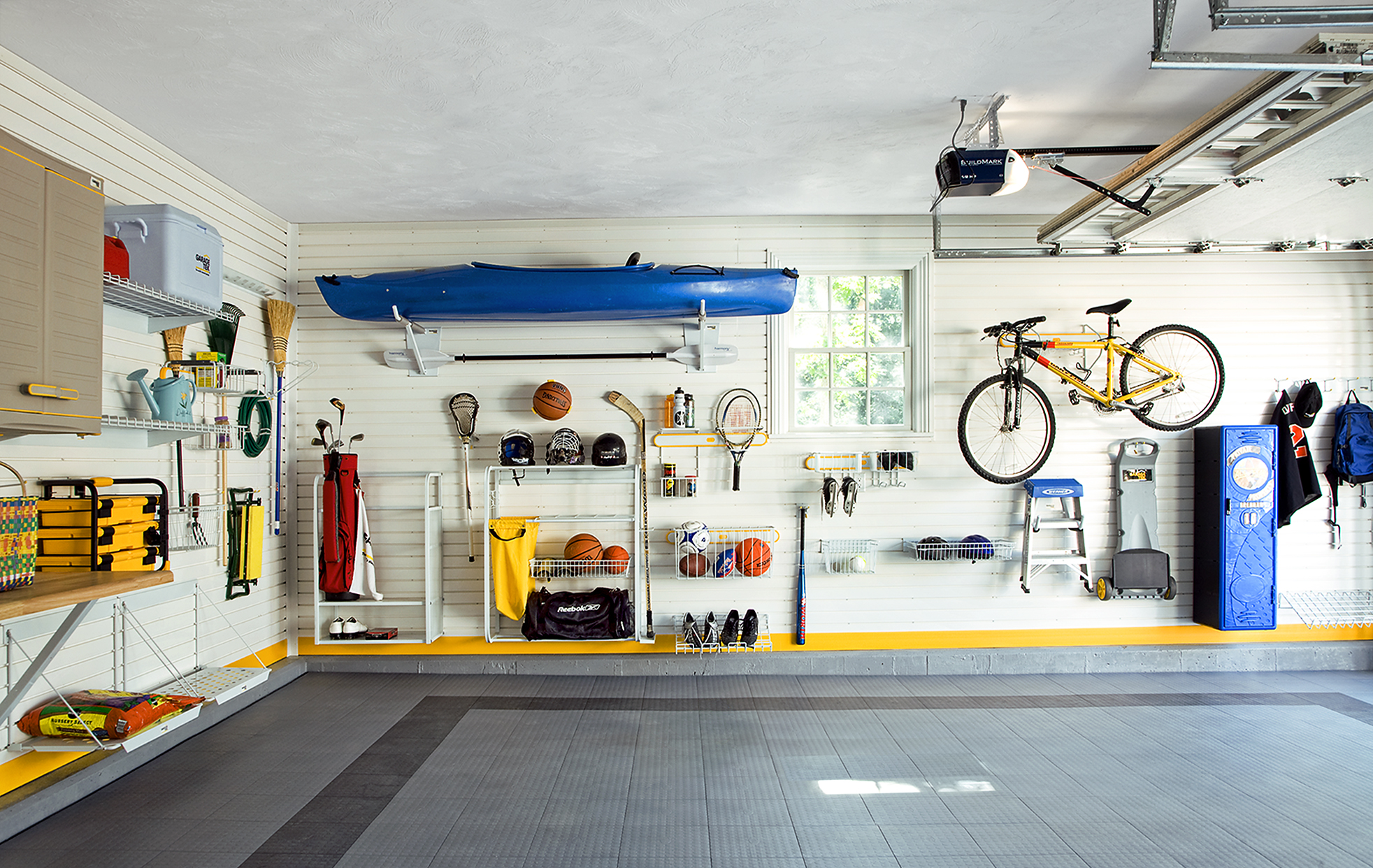
How to Declutter a Messy Garage
A bigger garage won't fix it. Andrew Mellen on why your garage became a dumping ground for every decision you didn't want to make—and how to actually clear it, one timer at a time.
Read the article →
Why Can't I Keep My House Organized?
Getting organized isn't the problem. Staying that way is. Andrew Mellen on why we're addicted to the dramatic reveal and allergic to the boring maintenance that actually works.
Read the article →